

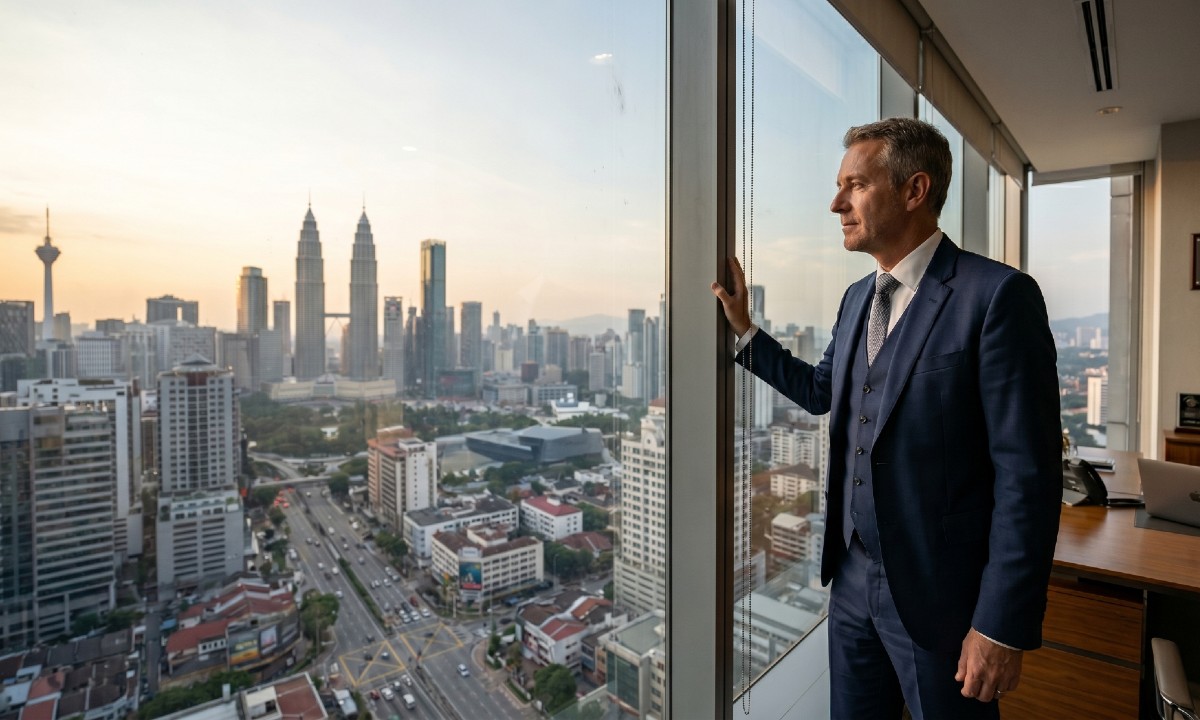

Relocating a regional HQ to Kuala Lumpur is a business strategy decision. The gaps most MNCs miss can cost years of operational efficiency.
MNC regional HQ relocation to KL is accelerating. Malaysia attracted record FDI inflows in 2024, driven by the China Plus One strategy reshaping Asia-Pacific supply chains, and Kuala Lumpur now appears on most regional HQ shortlists.
One common mistake companies make is treating the relocation primarily as an office search. In our experience at MOS by Hartamas, the real risks sit in sub-market selection, total occupancy cost, lease structure and building quality; not only in square footage and headline rent.
This article is for HR managers, regional finance leads, and corporate decision-makers preparing to establish or move a regional headquarters to KL. Below are the eight areas where we consistently see MNCs underestimate the complexity.
TL;DR — Quick Summary
- KL is not one office market: KLCC, TRX, KL Sentral, Bangsar South, Mid Valley, KL Eco City and PJ serve different needs.
- Prestige does not guarantee talent access: WP Kuala Lumpur’s private office occupancy is 70.9%, below the national average.
- Base rent is not the real cost: Fit-out, service charges, parking, legal fees and reinstatement can change the full cost.
- Lease flexibility is negotiated early: Break clauses, Rights of First Refusal and expansion options must be secured before the Letter of Intent is signed.
- Building quality is operational: Power redundancy, lift performance and carrier diversity matter beyond the lobby.
- ESG compliance is now a filter, not a bonus: Green-certified KL buildings are outperforming on occupancy and rents.
- Engage a tenant representative: Early engagement at the brief stage maximises options and leverage.
Table of Contents
- Is KL Really One Office Market?
- Does a Prestigious Address Help Talent Access?
- What is the Real Cost of a KL Office Relocation?
- Why Does Lease Flexibility Matter for Regional Headquarters?
- What Does Building Quality Actually Mean for Daily Operations?
- How Do ESG and Compliance Affect Office Selection?
- What Should MNCs Negotiate in a Commercial Lease?
- When Is the Right Time to Involve a Tenant Representative?
1. Is KL Really One Office Market?
Kuala Lumpur is not one single office market. It is a collection of sub-markets, each driven by different industry clusters, infrastructure standards and rental dynamics. Choosing between them is a strategic decision, not a branding exercise.
NAPIC’s Purpose-Built Office Rental Index (PBO-RI) for Q1 and Q2 2025 records a City Centre average of RM 5.22 per sq ft per month, compared to RM 4.58 per sq ft per month Outside City Centre. That gap reflects fundamentally different ecosystems.
| Sub-Market | Core Hubs | Primary Demand Driver | Strategic Suitability |
|---|---|---|---|
| New CBD | TRX / KLCC | Global Finance, Oil & Gas | Sovereign prestige, ESG mandates |
| Old CBD | Raja Chulan corridor | Local SMEs, Back-office functions | Cost sensitivity, established tenants |
| KL Fringe | KL Sentral | Professional Services, MNCs | Mobility, regional connectivity |
| Digital Hubs | Bangsar South / MSC Zone | Tech, GBS, Fintech | MSC status, tech ecosystem |
| Integrated | Mid Valley / KL Eco City | Retail-linked, Corporate | Employee lifestyle, amenity access |
| Decentralised | Petaling Jaya / Damansara | Pharma, Logistics, Finance | Proximity to talent, lower OpEx |
Key points to note:
- TRX has emerged as Malaysia’s newest international financial district, attracting major financial institutions and establishing itself as a premium alternative to the older KLCC corridor
- KL Sentral consistently records occupancy above 85% for transit-oriented office buildings — among the strongest of any sub-market in the Klang Valley
- Bangsar South’s MSC (Malaysia Digital) Cybercentre designation makes it a top choice for tech-heavy MNCs and Global Business Services units.
What Are the Advantages of MD Status Office Space for Tech-Oriented HQs?
Malaysia Digital (MD) Status office space offers a set of technical and commercial benefits that standard tenancies do not. For MNC HQs with significant connectivity or data requirements, it is worth understanding the distinction early in the search.
- Dedicated, high-performance fibre with guaranteed uptime, compared to shared best-effort bandwidth in standard buildings.
- Potential eligibility for government grants and tax exemptions administered by MDEC (Malaysia Digital Economy Corporation).
- MD Status offices may be a prerequisite for certain MIDA incentive programmes.
2. Does a Prestigious Address Help Talent Access?
A prestigious KL address may impress visitors. If it sits outside a comfortable commuting range for your workforce, it will hurt hiring, attendance and retention over time.
The talent pool for regional HQ roles in KL is usually concentrated in the suburban ring: Petaling Jaya, Subang Jaya, Damansara, Cheras and Ampang.
Research published in the Journal of Asian Geography (USM) found that residential properties within 400 metres of an MRT station command a 9.5% price premium, reflecting how much employees value transit access.
What this means for MNC employers:
- A building without direct MRT or LRT connectivity narrows your recruitable talent pool immediately.
- Under hybrid work, poor commute access may affect voluntary office attendance
- Replacing skilled employees can involve substantial recruitment, onboarding and productivity costs. Replacing expatriate management costs significantly more, often a multiple of local-equivalent costs.
| Talent Category | Commute Sensitivity | Key Risk of Poor Transit Access |
|---|---|---|
| Senior Management | Medium | Decisions driven by school proximity and lifestyle, not just office address |
| Mid-Level Management | High | Attrition under hybrid work due to commute fatigue |
| Entry-Level / Support | Very High | High churn if office is not rail-connected |
Pro Tip: When shortlisting offices, it helps to assess MRT or LRT connectivity and proximity to the executive residential cluster alongside the building address.
3. What is the Real Cost of a KL Office Relocation?
Base rent is not the real cost. The Total Cost of Occupancy (TCO) for a regional HQ in KL includes fit-out capital, service charges, after-hours air-conditioning, parking, legal fees, reinstatement and downtime.
Grade A offices in KL are typically delivered in bare shell condition. Before a single employee arrives, capital must be committed to fit-out, authority approvals and infrastructure.
| Cost Component | Indicative Range (for budgeting reference only) | What Drives the Variance |
|---|---|---|
| Base Rent — City Centre (Grade A) | RM 5.22 avg (NAPIC PBO-RI Q2 2025) | Varies by floor, building age, lease duration and incentives negotiated |
| Fit-Out — MNC Grade A Standard | Broadly RM 14 – RM 23 per sq ft/month (illustrative amortisation over 5 yrs, based on RM 150–RM 250 psf capex — actual capex depends heavily on specification) | Specification, supply chain timing and contractor rates all affect final cost |
| Service Charge | Typically RM 1.50 – RM 2.50 per sq ft/month | Varies by building; some charge more for higher-amenity or managed assets |
| After-Hours Air-Con | Generally RM 100 – RM 350 per hour per floor | Rate varies by building; negotiate a fixed after-hours rate before signing |
| Season Parking | Often RM 200 – RM 350 per bay/month | Location and building tier affect pricing; additional bays may be scarce |
| Legal Fees (Lease) | Can vary widely; larger HQs should budget RM 20,000 – RM 30,000+ | Governed by Solicitors' Remuneration Order 2023; discounts up to 25% are permitted |
| Reinstatement at Lease End | Broad range: Starting from RM10-20 per sq ft, depending on size and condition | Scope depends on what was done during fit-out and what was negotiated in lease terms |
A further cost took effect on 1 January 2025: the stamp duty exemption on the first RM 2,400 of annual rent was removed, making the full rental value subject to stamp duty. Seek legal advice on the exact amount applicable to your lease structure.
The key takeaway for MNC finance teams:
- Fit-out, service charges and reinstatement can collectively exceed base rent over a full lease term.
- The gap between headline rent and true occupancy cost is wider than most business cases account for.
- Model the full TCO across several scenarios before shortlisting buildings. The numbers will look different for each one.
Pro Tip: Ask any building you shortlist to provide an all-in cost estimate: base rent, service charge, parking and after-hours rates. This gives you a clearer basis for comparison early in the process.
4. Why Does Lease Flexibility Matter for Regional Headquarters?
Regional headquarters need lease structures that accommodate headcount growth, hybrid work, restructuring and regional expansion. Not all of these protections are standard in Malaysian commercial leases. They must be negotiated before the Letter of Intent is signed.
The key flexibility instruments MNCs should seek:
- Right of First Refusal (ROFR): The right to match any competitive offer for adjacent space before the landlord markets it externally.
- Right of First Offer (ROFO): The landlord must offer vacant adjacent space to the tenant before approaching third parties.
- Contraction Rights: The ability to return a defined portion of space if headcount reduces, typically in exchange for a pre-agreed fee.
- Break Clause: The right to exit after a minimum hold period (typically 24 months) with six months’ notice and a penalty of three to six months’ rent.
- Core-Plus-Flex Model: A permanent core office supplemented by co-working desks for project teams or seasonal headcount expansion.
Without a break clause, tenants may remain exposed to substantial financial liability if they vacate early. This risk is rarely on the radar when a regional board approves a relocation budget.
Pro Tip: Negotiate flexibility clauses before rent-free periods. A break clause protects you for the full 5-year term. A rent-free period ends after the first few months.
5. What Does Building Quality Actually Mean for Daily Operations?
Building quality for a regional HQ means operational resilience, not lobby aesthetics. Lift performance, power redundancy, internet infrastructure and air-conditioning reliability all affect daily productivity. Failures of these could be costly.
| Technical Feature | Grade A Standard | Operational Impact |
|---|---|---|
| Power Redundancy | Dual feed + tenant UPS (MSC Tier 1) | Protects IT infrastructure during grid-level outages; Tier 2 buildings only back up common areas |
| Internet Redundancy | Triple-carrier fibre | Prevents downtime in cloud-dependent regional operations |
| Lift Performance | Maximum 30-second wait interval | Older buildings can exceed 60 seconds during peak periods; measurable productivity loss |
| Air-Conditioning | Chilled water + VAV system | Precise control for server rooms; after-hours cost applies outside standard hours |
| MSC Tier 1 Status | 24-hour individual unit backup power | Non-negotiable for most MNC regional HQ mandates; Tier 2 leaves tenant server rooms unprotected |
Three points worth checking during building due diligence:
- Confirm MSC Tier 1 or Tier 2 designation — the power redundancy difference is critical for 24/7 IT operations.
- Request the building’s lift traffic study. Most Grade A landlords should be able to provide this, and a lack of transparency may warrant further questions.
- Check the after-hours air-con rate in writing. Assuming RM 350 per hour per floor, a team managing APAC or EMEA time zones faces a significant recurring cost.
6. How Do ESG and Compliance Affect Office Selection?
ESG and compliance are now part of the office selection decision for MNCs. Buildings that appear suitable locally can fail global corporate real estate requirements, triggering sustainability audit failures and reputational risk.
In the Klang Valley, green-certified buildings, those holding GBI (Green Building Index), GreenRE or LEED accreditation, are consistently outperforming non-certified buildings on occupancy and rental rates, according to JLL ESG Research.
One key reason is tenant demand. MNC are increasingly consolidating into buildings that meet global sustainability standards.
Key actions for MNC real estate teams:
- Treat GBI, GreenRE or LEED certification as a shortlisting filter, not a post-signing aspiration.
- Request a green lease clause schedule from the landlord before negotiating commercial terms.
- Verify that the building’s sustainability reporting capabilities match your global audit requirements.
- Upgrading a non-certified building to meet green targets later in the lease term can be expensive.
Pro Tip: Resolving sustainability compliance gaps after lease execution can be operationally difficult and costly. Confirm certification status before the shortlist is finalised.
7. What Should MNCs Negotiate in a Commercial Lease?
The lease agreement decides the long-term risk profile of the regional headquarters. Most MNCs focus on a handful of headline terms.
The clauses that govern reinstatement scope, signage rights, parking allocation and after-hours access are often where risk accumulates quietly over a longer term.
Key negotiation points beyond headline rent:
- Reinstatement scope: Return office space to its original condition upon lease expiry. Explore whether a conditional reinstatement arrangement may be possible, subject to landlord’s discretion.
- Signage rights: Building-top or lobby-level signage is allocated on a first-negotiated basis, not first-signed. Confirm this early.
- Parking allocation: Standard allocation for Grade A buildings is 1 bay per 1,000 sq ft. Negotiate additional bays at a fixed rate where your headcount requires it.
- After-hours air-conditioning: Agree a fixed rate or monthly allowance if your team regularly works outside standard building hours (typically 8:30 am to 5:30 pm weekdays).
- Expansion rights: ROFR or ROFO on adjacent space protects against having to relocate again if the business grows during the lease term.
- Break clause: The right to exit with notice after a defined minimum period protects against structural changes to the business.
| Lease Risk | Mitigation Suggestions |
|---|---|
| Early exit liability | Break clause exercisable after month 24 with 6 months' notice |
| Unexpected headcount growth | ROFR on adjacent floors or Core-Plus-Flex with a co-working operator in the building |
| Reinstatement liability | Define fair wear and tear; explore conditional reinstatement arrangement |
| Loss of signage rights | Confirm signage entitlement in the heads of terms, not only the formal lease |
| After-hours cost overrun | Fixed after-hours AC rate or monthly allowance agreed upfront |
Pro Tip: The heads of terms sets the negotiating floor. Once the formal lease is drafted, moving off those terms becomes significantly harder. Every point above should be addressed at heads of terms stage.
8. When Is the Right Time to Involve a Tenant Representative?
Some MNCs engage a property advisor only after they have already shortlisted buildings internally. By that point, they may have missed stronger options or overlooked risks that an earlier market review would have caught.
A tenant representative engaged at the brief stage, not the shortlisting stage, can assist with:
- Submarket comparison. How KLCC, TRX, KL Sentral, Bangsar South, KL Eco City and Petaling Jaya differ on rental rates, occupancy, infrastructure, and talent access. NAPIC PBORI Q1–Q2 2025 records a City Centre average of RM 5.22 psf/month versus RM 4.58 psf/month Outside City Centre — a gap that reflects fundamentally different ecosystems, not just price tiers.
- Confidential longlisting and shortlisting. A market search that captures options not yet actively marketed. The company evaluates a wider field before any preferences form.
- Landlord negotiation and lease term benchmarking. What the market is actually delivering on rent-free periods, fit-out contributions, service charges, and break clauses. The company negotiates from evidence instead of expectation.
- Expansion options and building due diligence. Whether the building can accommodate headcount growth. Power redundancy, lift performance, carrier diversity, and reinstatement terms reviewed before any heads of terms are signed.
MOS works across both sides of the office market, giving clients a clear and balanced view of available options, and negotiate the best possible outcome on their behalf.
In this case study, we show how MOS worked closely with a global F&B business to identify and secure the right office in KL.
Pro Tip: Involve a tenant representative at the brief stage, not the shortlisting stage. That is when the widest range of options is still open and negotiating leverage is at its strongest.
The Decision That Decides a Decade
For MNCs, relocating a regional headquarters to KL is not about finding the cheapest office. It is about choosing the right base for talent, operations, compliance and long-term regional growth. Sub-market, technical credentials, total occupancy cost and lease structure all interact. A weakness in any one of them creates compounding operational risk.
The KL office market, as tracked by NAPIC, reflects a polarised landscape: premium, well-specified assets are gaining occupancy while older stock is losing it. MNCs that approach the market with a strategy-first methodology — mapping talent access, modelling total cost, auditing building quality and negotiating lease flexibility before signing — are the ones that build regional platforms capable of scaling. The lease signed today defines operational risk for the next decade.
Speak to MOS by Hartamas
Whether you are a corporate tenant looking for an unbiased assessment of the market, or a building owner seeking occupier advisory, MOS works across both sides. We help MNCs model true relocation costs, benchmark the market and negotiate lease terms — so you make the right decision, not just the fastest one.
Not sure whether to relocate or renew your current lease? Share your situation and we will give you an honest market comparison — no obligation.
